The Sapphire class was essentially the Bengali class with dual purpose guns. The twin 5.5" were swapped out for twin 4.5" mountings. The need for the same size ship was in the rounds per gun requirement. The 5.5" had 100 rounds per guns where the faster firing 4.5" required 160 rounds per gun. Slightly bigger magazines and reconfigured magazine layout for the smaller shells got everything into place. The Bengali had to sacrifice a second quad 2 pounder to mount a twin 4" mounting for a heavy AA weapon. This was not required with the 4.5" mountings as the main weapon. The second 2 pounder mounting is reinstated on the Sapphire class. The other major armament change was the deletion of the awkward broadside torpedo mountings, those being replaced by a centerline mounting. The ships boats being rearranged to compensate.
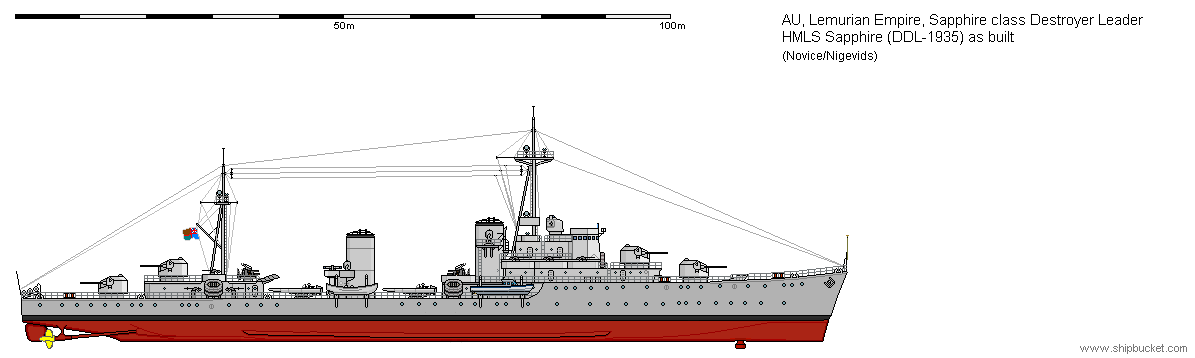
The ships were ordered in pairs for completion in 1935, 1937 and 1939. Being near cruiser size these ships took cruiser duties at times and were classed as Flotilla Cruisers rather than Destroyer Leaders. At one stage the 6th Cruiser Squadron was composed of two Diana Class and two Sapphire Class. The 6th Cruiser Squadron, when it was formed in the Mediterannean, was tied to the main battlefleet. Admiral Cunningham knew the AA value of those four ships and wanted it around his carriers. The only time the Squadron was let off the leash was when the Commodore in charge was ordered to intercept a light cruiser and three destroyers, being sent to reinforce a convoy under attack by Force K. The Italian force was under surveillance and the 6th was receiving constant updates as to its whereabouts. Both forces were on either side of an island but the 6th knew exactly when to go to full speed and which way to have its guns pointing. The Italians came around the end of the Island to find the 6th roaring down on them, looking to cross the 'T', all guns firing. In the time it took the Italian ships to go to red alert, the battle was over. The fast firing 4.5" swept the decks of the Italian ships leaving the Italians nothing left to fight with. Torpedoes in the water from the 6th and that was that. Each Italian ship took at least one hit and all went down. Clean sweep.
The Glowworm leaves its mark on the Hipper.
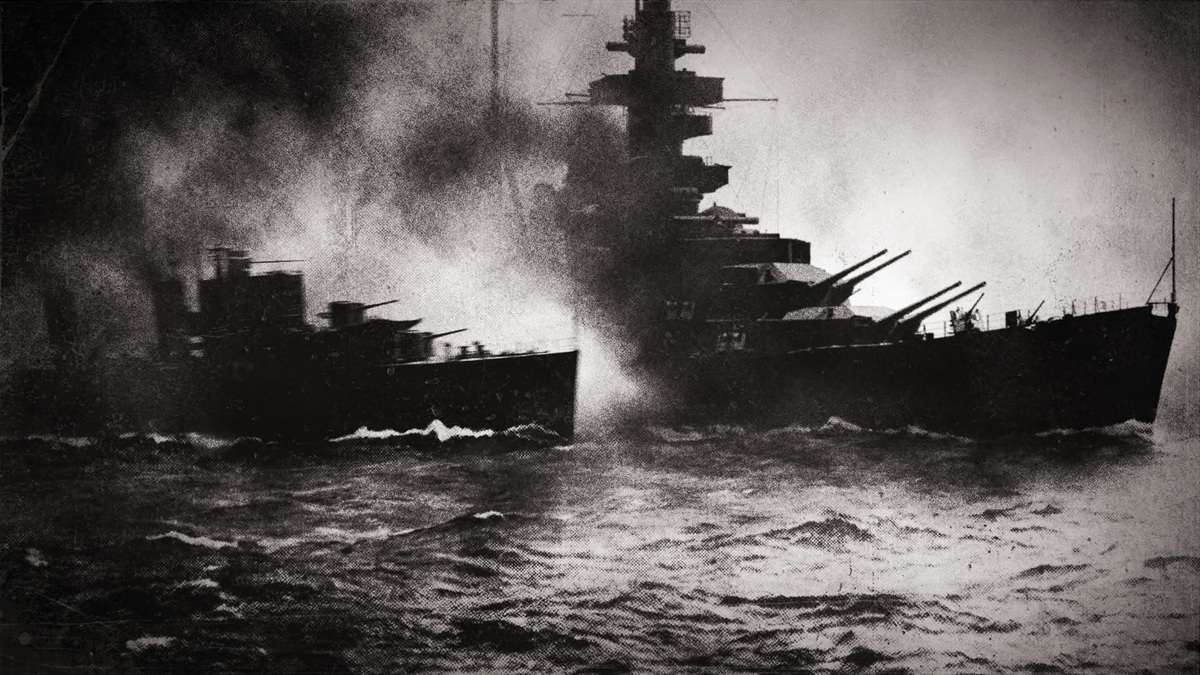
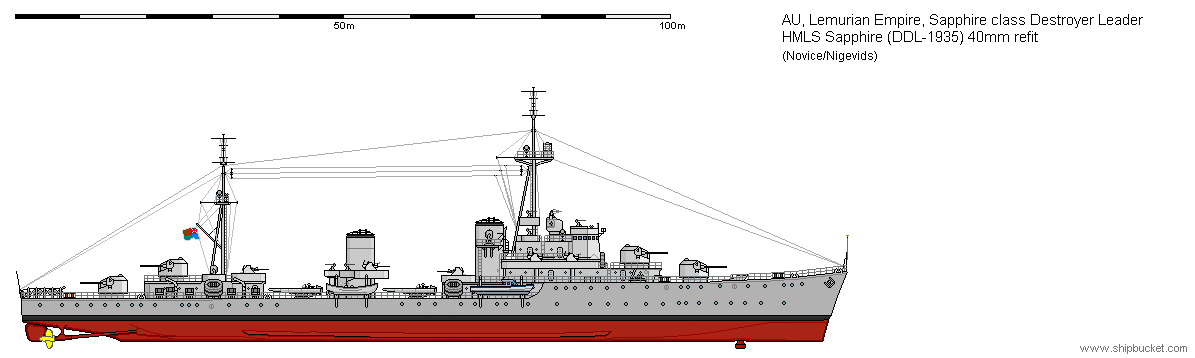
The five remaining ships started their 40mm and radar upgrades during 1942. When, would depend on where the ships were. Two were refitted at Alexandria, one at Glasgow, and two at Colombo. What happened to the Amber? The Norwegian Campaign 1940. The Amber was the leader of four other destroyers, with orders to intercept German shipping in the Trondheim area. One of the flotilla, the Glowworm reports engine problems and has to reduce speed. The other four ships carry on with their sweep. The Glowworm reports a cruiser and escorts and goes into action and manages to ram a Hipper class cruiser, but sinks after the ramming from gunfire. The Amber and destroyers get the call from the Glowworm and turn back to get their ships in between Trondheim and the Germans. The German Kapitan is surprised to find the Allied force and orders the attack. The Hipper itself opens fire on the Amber, which orders the Squadron to fire torpedoes at the German line. Gun flashes up and down both lines, then the gouts of red as the shells hit their targets. The Amber is hitting the Hipper but its 54lb shells don't do a lot of damage. Unfortunately the same can not be said of the 8.2" German shells. The 150kg shells hitting the Amber tore chunks out of it. Amber was not built to take that sort of damage and half a dozen hits had the Amber dead in the water. One of the German torpedo boats fired a bank of three torpedoes at the Amber, two hits and the Amber started taking more water in than it could get out, finally capsizing and sinking. Those last few minutes were heightened by the beautiful sight of the tower of water above the Hipper as a torpedo found its mark. The Hipper broke off the action and both sides retrieved survivors. The Hipper had temporary repairs at Trondheim then went to transfer back to Germany, on its way it was torpedoed by an Allied submarine and spent the next 12 months in Germany under repair.
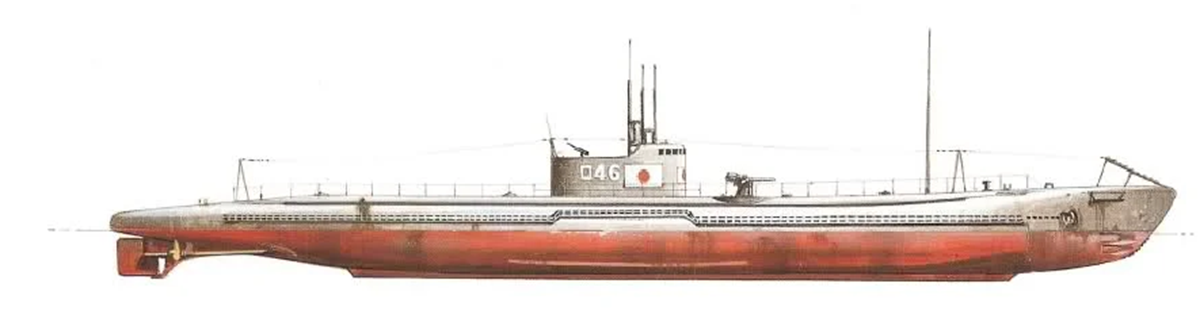
The Sapphire itself was the only other war casualty. It received two torpedo hits, meant for the carrier it was guarding, which tore open the side of the ship. A light cruiser came alongside to take off the survivors then put a torpedo into the hulk to sink it. Other escorts of the Fleet sank the Japanese submarine that fired the lethal torpedoes.
O Class submarine that put two torpedoes into the Sapphire, July 1944. (Not to Shipbucket scale)
The remaining four remained in service after WW2 as no new leaders had been built during the war. By 1950 this had been rectified and these ships were transferred into the reserve fleet for a few years, when they would be deleted from the Navy List and sold for scrap.