With the Diamond class in production, a bigger 'Flotilla Cruiser' that could be used for multiple duties was designed. It was decided that the single guns of the Diamond type would be paired in a light turret and four would be fitted. These would still be the 40 degree angle guns. The Admiralty still wanted the ships to be fast. So where a cruiser would have some armour, these ships would be more destroyer than cruiser. Only two had been authorised before the next pair were cancelled and replaced with orders for the Sapphire Class.
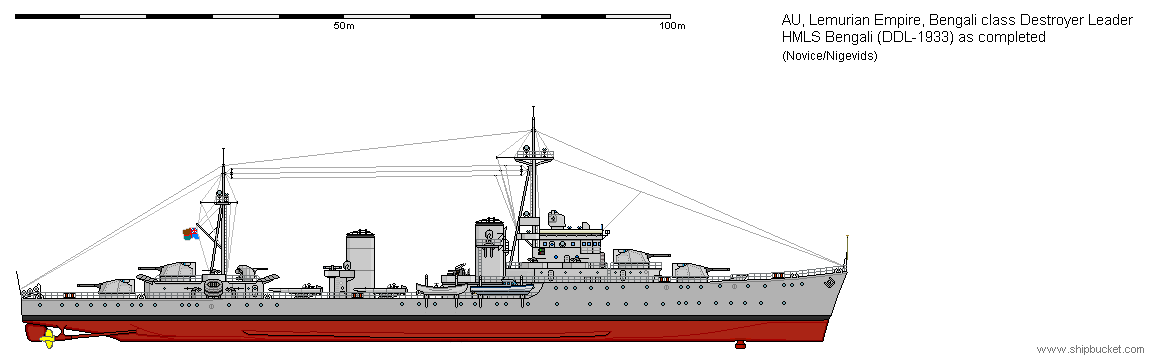
The ships were just out of the Dual Purpose era, and had originally been designed to have two quad 2 pounder mountings. Late in the build the design was changed to swap out the Q 2 pounder mounting for a high angle twin 4". The five years after their completion saw the two ships as leaders of the 1st and 2nd Destroyer Squadrons. Plum positions. That would be the heydays of the two ships. The outbreak of war saw them being sent off to European waters for the Bengali and to the Mediterannean for the Tamil.
The Bengali went to Scapa Flow and the Home Fleet. There it was to be sub-leader of the 11th Destroyer Squadron. The Overall Leader was a Tribal Class and the rest of the Squadron was made up of A-I class destroyers. The Bengali and its Squadron were part of a Task Force with a carrier, two battleships, and a light cruiser, tasked with intercepting German shipping trying to run the Commonwealth Blockade into German European ports. The cruiser and the destroyers were kept busy following up calls from the carriers aircraft as they found shipping that needed checking. During this period, only one merchant ship was captured another seven scuttled themselves so that their valuable cargoes would not fall into enemy hands. Then came Norway and the same battlefleet (Group Apollo) went north to try and intercept shipping going to Norwegian ports. The Bengali was part of the 'dozen destroyers'. The Bengali remained with the Fleet while several of the H class went into the Narvik Fjords and into history. The Bengali and Flint sank the U-boat that torpedoed the Apollo.
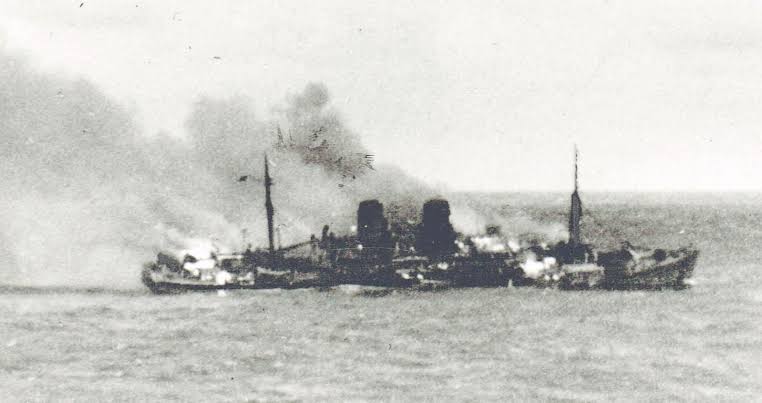
Blockade runner Watussi sunk by HMS Renown during 1940 operations.
The Germanic States next enterprise was the attack on France. Blitzkrieg at its finest, with the Army and Air Force units operating closely to drive everything before them. This led to the miracle at Dunkirk. Neither ship was involved with these events, both being tied to their respective Squadrons and Fleets. France falls and both ships become more active. While HMAS Sydney chases and sinks the Bartolomeo Colleoni the Tamil chases the Bande Nerre and badly damages it before a couple of hits on the Tamil reduces its speed and allows the Italian to escape. Six weeks in Alexandria is required to repair the damage. 1941 and Force K is formed, based on Malta, to interdict Axis reinforcements getting to North Africa. The ships are two light cruisers and four destroyers, Tamil is the destroyer leader. Their greatest success was the annihilation of the Duisburg Convoy, where seven merchant ships and their escorts were wiped out. Other successes by the group followed and the Germans and Italians plotted to destroy the group. The next four ship convoy, with three destroyers, would have a four cruiser cover force nearby. Ready to intercept Force K should it try to attack the convoy. Force K attacks and is caught between the cruisers and the destroyers escorting the convoy. The two Leander class take the two heavy cruisers while the Tamil and a J Class take the two light cruisers on, leaving the two other J Class to take the Italian destroyers and convoy. Searchlights slashed through the night and gouts of gunfire followed. The lead Leander takes four 8" hits and slows dramatically. This leads to disarray in the battleline as the ships go left and right to avoid it. The Tamil continues to fire at its target, hitting it multiple times. The senior cruiser Captain orders torpedoes to be fired at the cruisers and convoy. The Tamil sees its opponent burning and slowing, a searchlight beam on the stern shows the ship to be the Bande Nerre again. This time there is no escape, the torpedoes from the Tamil arrive, boom, boom, boom, three hits. The Bande Nerre explodes and disappears. The Italians have done the same with the damaged Leander being hit twice and is now sinking. The Tamil receives a hit and is crippled, speed bleeding away. One of the Italian heavies receives two hits and the Admiral decides to finish the job and closes on the remaining Leander. The Commodore aboard the Leander orders the recall. Two of the four transports have been torpedoed and sunk, one of the Italian destroyers is crippled. Force K is reduced to one cruiser and two destroyers. The Tamil is ordered to Alexandria. Both Axis and Allied aircraft are out looking for damaged ships from the previous nights battle. Six JU88's catch the Tamil and its J Class escort. The J with its full speed available dodged the attacks on it. Not so the Tamil. Four bomb hits are too much for the already crippled ship. The J comes along side and takes off the crew, then hauls off and fires a torpedo into the Tamil which shudders, heels over and capsizes.
Junkers JU-88A of the type that finished off the Tamil.
.jpg)
The Bengali has been tied to the Home Fleet as a Destroyer Leader. It has watched many sorties being flown off the carriers and changes of heading requiring the destroyers to speed up or slow down, depending on which side of the Fleet you were on. While the Tamil was fighting with Force K the Bengali was involved in the largest battle since Jutland, The Battle of the Denmark Strait pitted the two main battlefleet's against each other. The battle seesawing either way. The Bengali is with the destroyers under the Captain 'D' on Eskimo. Watching the Battle up close and personal is awe inspiring. The huge guns firing and explosions as shells hit the battleships on both side. The destroyer line is twice tasked with trying to make the German line turn away to give the Allied battleships a chance to recover. The Bengali receives splinter damage, and that is all.
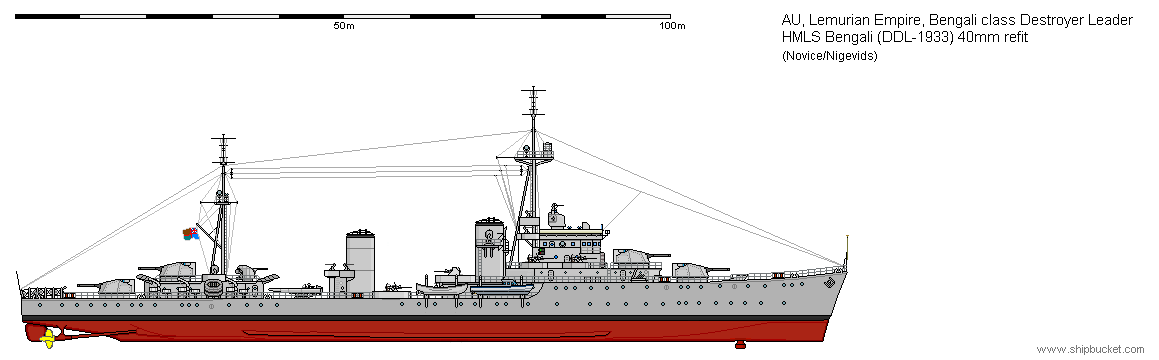
The Bengali returns to Scapa Flow with the Fleet, then receives orders to join Convoy Command at Liverpool. The Bengali is to become a Convoy Escort Command Destroyer. To this end the Bengali receives upgraded Radar, new 40mm armament and extra depth charges. The new Hedgehog unit is fitted either side of B turret next to the hatch through which new mortar charges are passed to the mortar crew. Extra 40mm mountings replace the two twin torpedo tube mounts on each broadside. The Bengali returns to a changed world. Japan has attacked the US at Pearl Harbour and the Germans have declared war on the United States as well. The German U-boats are ordered to the US Atlantic Coast. The US is slow to go to a war stance. City lights still burn all night and silhouette the US ships passing up and down the coastal routed in single ship units. Convoys are not instituted for months. This is the U-boats second 'Happy Time'. Hundreds of thousands of tons of shipping are lost. What this does do is to lessen the attacks on the Allied Convoys crossing the Atlantic. By the time the U-boats switch back to attacking the Atlantic Convoys, the situation has changed in the Allies favour. There are now enough Escort Carriers for the most valuable convoys to have one. These would be surrounded by escorts to stop them getting torpedoed. An escort putting itself in the way of a torpedo meant for the Carrier was doing its job.
The German Wolf Pack tactics worked for the short term as the Allies made counter moves. Then the U-boats went to 'get the Escorts first'. This was aided by the introduction of the new G7 torpedo with acoustic homing. Acoustic torpedoes would be used on the Escorts and then normal contact torpedoes on the merchant ships. The Convoy Battles, during this period, were very bitter with no quarter given on either side. The new Hedgehog units worked well. On the other side the acoustic torpedoes also worked well. The Bengali sank one U-boat by itself with its Hedgehog mortar, and shared three other U-boat sinkings with other Escorts.
In January 1944 the Bengali joined the 10th Flotilla at Plymouth, and for the next eight months was engaged in sweeps and patrols in the Channel and the Bay of Biscay. The Bengali was present for D-Day and was part of the bombardment force. That year Bengali took part in the sinking of several enemy vessels, including torpedo boat T 29 on 26 April off Ushant; T 27 on 29 April off Ushant; destroyer Z 32 on 9 June off Ile de Bas; U 971 on 24 June off Land’s End; and minesweeper M 486 on 6 August off Ile d’ Yeu. Now October 1944, Bengali is ordered home to Colombo. This can now be done through the Mediterranean with the Axis forces defeated in that area. The Bengali is to join the Lemurian ships in the Commonwealth Pacific Fleet.
German Torpedo Boat T29, sunk by ships of the 10th Flotilla including the Bengali.
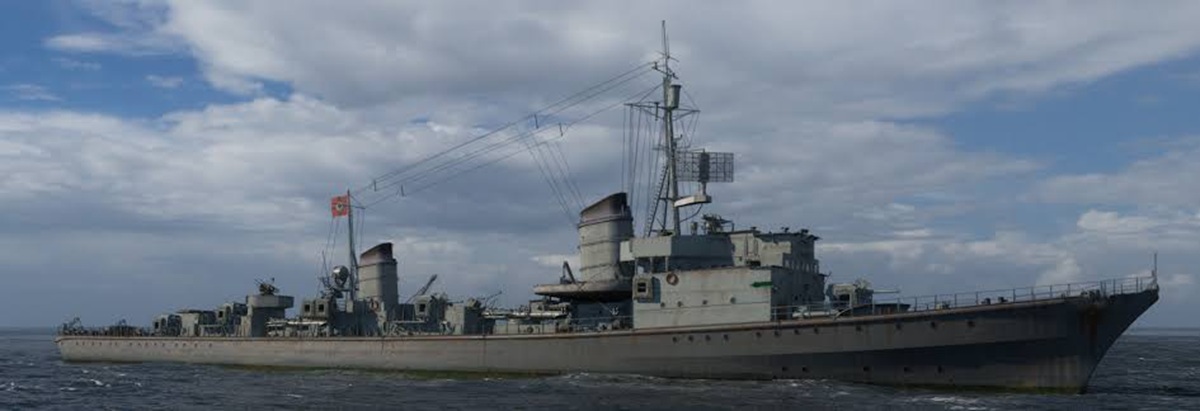
Back in Colombo the crew is given leave while the ship is upgraded with the latest Radar and electronics. Then it is off to Singapore where the Bengali is to be the Escort Command ship to the Fleet Train. A job it is well used to. This would be the Bengali's duty for the rest of the war. On arrival back in Colombo in December 1945, the ship is paid off to the reserve Fleet. 1947 the ship is struck from the Navy List and sold for scrap.
A small finishing note: some of these ships I draw, and then dream up back stories for, are normally based on real life situations. Which is why it takes so long for some of them, as I research where to sink them and to involve them in battles.