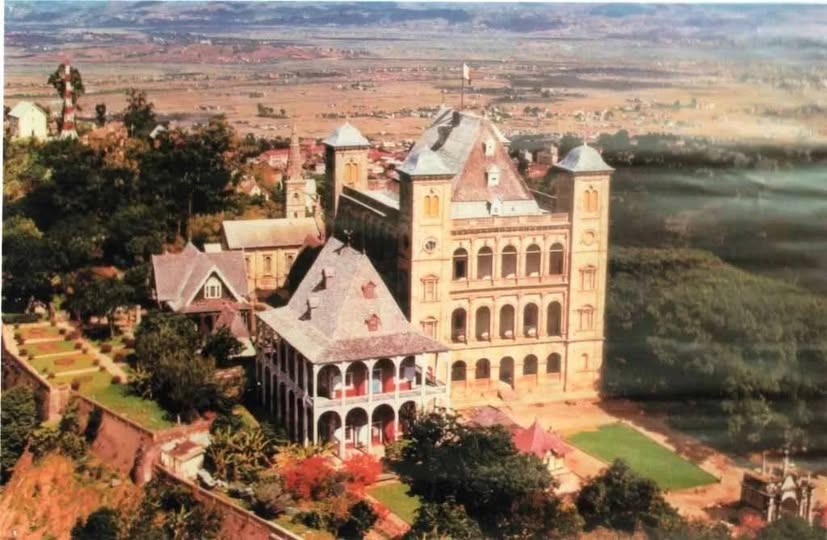
The Lemurian Navy had the two spare twin 12" turrets and mountings removed from the Valondambo class battleships when they were converted to Area Defence Vessels. The original thought was two do another double ended monitor such as the Australis Echidna. Australis had a lot of twin 12" removed from the Van Diemen and Tasmania Class ships. While most of these were incorporated into the Echidna class the Lemurian Navy was able to lay hands on the three turrets left over from the Van Diemen. With five twin turrets, an acceptable modern 12" battlecruiser could be built. It would make a fine Flagship and ship of force to the cruiser squadrons.
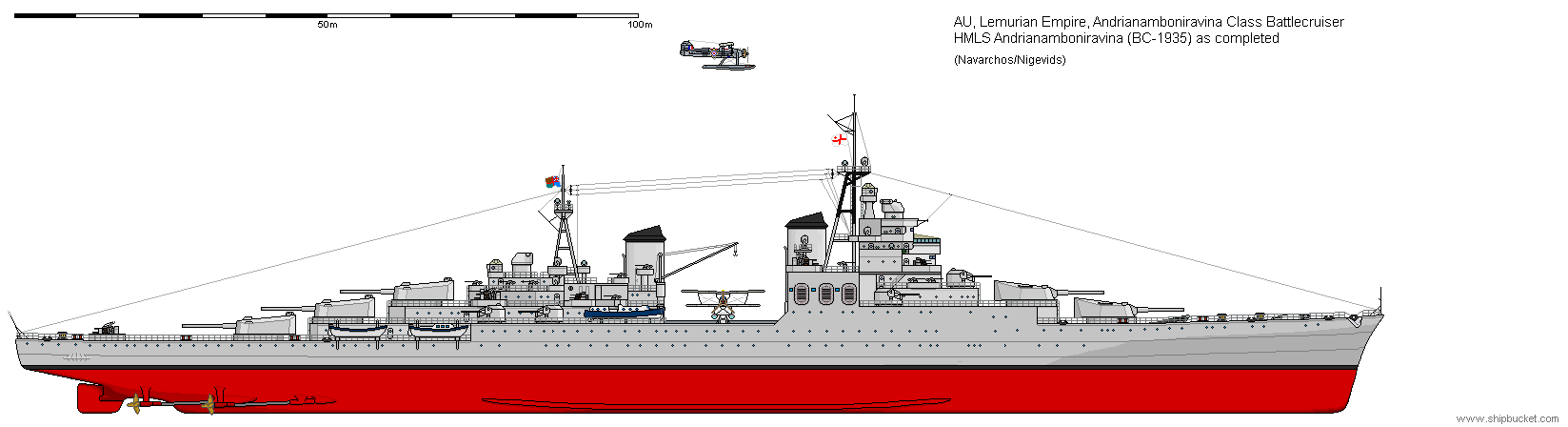
The hull design was the hydrodynamic type used in half a dozen cruiser classes, upscaled for use in a capital ship. The main weapons were refurbished with elevation being raised to 35 degrees, giving an increase in range to 30,000 yards. The twin 4.5" Dual Purpose weapon system was first class. These were bag and shell weapons as opposed to the fixed ammunition trialed by the Royal Navy in the 4.7" AA guns fitted to the 1920's ships. The fixed shell was too heavy for prolonged firing. A necessity for AA guns. A large battery of the 2 pounder guns were fitted for close in AA work. The 20mm Hispano-Suiza guns were fitted in single mounts. The 20mm Oerlikon fired faster and was easier to reload, which was why it took over from the Hispano fittings 1939-40. A cross deck catapult was fitted with a large hangar to take three aircraft. The Andrianamboniravina was ready to do big things.
The Andrianamboniravina's first posting was with the main fleet at Colombo as Flagship of the 1st Cruiser Squadron, a Rear Admiral with his flag at the fore. This was a plum posting, not only for the ship but also for the officers and crew who could expect promotion either within the ship or on transfer to another. The 1st cruiser squadron transferred to the Eastern Mediterranean where it was split up with the Andrianamboniravina being transferred through to the Western Med in June 1940, just days before the French surrender. On arrival at Gibraltar the Andrianamboniravina became Flagship of the Force H cruisers and third in command of the Fleet. The Andrianamboniravina was at Mers el Kebir and fired at the French Fleet along with other ships of Force H. Only weeks before the Andrianamboniravina had stopped at Mers el Kebir to show the Lemurian Flag. This story went through most of the ships in Force H who had been fighting with these same ships in the first year of the war. The intransigence of the Admirals in charge led to a disaster that could have been avoided.
A small aside. July 1940 to November 1940, Great Britain was fighting for survival. Winston Churchill had to show that Great Britain had the guts to survive, to FD Roosevelt, so that the US would back the Allies to win. Without the US help during this period, before the US entered the war, Europe would not have survived. The decisions made with Lend/Lease and the payments to the US for materiel and food, bled the United Kingdom and its Allies dry. This was purely political. FDR wanted the US to emerge from World War Two as the major economy and driving force of the world. He succeeded. Churchill ordering Admiral Somerville to fire on the French was a part of the 'guts' shown to the US. The rest is History.
The Battle of the Denmark Strait allowed the Ostereich to escape into the Atlantic by turning right at the end of Greenland and creeping down the coasts of Canada and the US before turning back into the Atlantic to try its luck on the convoy routes. The whole North Atlantic was in a state of flux as the Commonwealth Admirals tried to make sense of the losses and how to replace them quickly in case the Germans sent their ships back for another go. Battleships and carriers were drawn from other Fleets to shore up the Home Fleet. This opened a window for the Ostereich to sneak into.
The first the Admiralty knew of the new threat was a series of RRR calls from a small convoy going south toward the Caribbean. The sole escort was overwhelmed and the four merchant ships run down and sunk. Dr Goebels trumpets "Allied Convoy completely wiped out". An intensive hunt for the perpetrator begins. Half a dozen hunting groups are formed with ships that are big enough to sink the German cruiser. The Andrianamboniravina and its team mates are one of those. So I am making this up as I go along. Now to work out what its team mates might be. October 1941 and carriers are in short supply. The only carrier available was the Atlantean training carrier Chronos, which had the battleship Demeter and two cruisers to form Force Q.
The Ostereich falls in with another small convoy but this one has a small cruiser, Dryad, as its escort. The Dryad heads toward the Ostereich taking that ships attention off the merchantmen. The Dryad correctly identifies the Ostereich so everyone knows who they are chasing. The Dryad's Captain knows that he is likely to lose his ship, but if his action can save any of the merchantmen then his loss would not be in vain. Force Q is a hundred miles away. A hurried force of six aircraft is arrayed and launched. Hopefully it will arrive in time. The two capital ships go to full speed leaving the cruisers to guard the carrier. The chase is on!!
The aircraft arrive to find the Dryad blazing from end to end and heeling to port, ready to capsize. The Ostereich is going past toward the convoy, when its lookouts spot the aircraft. The Ostereich knows it is in trouble then. These aircraft mean an aircraft carrier is not far away. For a raider a carrier means death. It is too early in the day for the Ostereich to be able to escape into darkness. The Ostereich carries on after the merchantmen, if it is going to die today then it is going to go out in a blaze of glory. The aim of the aircraft is to slow the Ostereich down. The two bombers and two fighters lead the way to give the two torpedo bombers as much cover as possible. If either of those two torpedoes can hit, then their job will be done. Both bombers score hits, both torpedoes miss, two aircraft shot down. The bomber with the most fuel is tasked with observation until it can be relieved by another reconnaissance aircraft. The bomber has hardly settled to its observing than it sends a message, "Ostereich is slowing". One of the bomb hits went down the funnel and exploded in a boiler room. Pure luck. With the Ostereich down to 20 knots, it would not be able to catch all of the merchantmen. What the Ostereich did not know was where the Allied ships were likely to be coming from. The Dryad did and ordered the convoy to scatter toward Force Q. The Ostereich was unaware it was steaming towards its nemesis at 20 knots. With a fifty knot closing speed it was only two hours before Force Q came within range of the Ostereich. Force Q had had a problem. The Demeter had been on its way to harbour at Hyperion for some much needed mechanical work. Demeter's condensers failed and the ship was down to 15 knots. Andrianamboniravina would have to do the job on its own. Andrianamboniravina launched its spotter aircraft and went for the Ostereich. The Ostereich could see it coming and knew it would be a match for the Andrianamboniravina. Both ships opened fire at about 27,000 yards. The Ostereich's gunnery was good but with aircraft calling the shots, the Andrianamboniravina was better. Both ships were scoring hits and damage on both was mounting. Suddenly the Ostereich was firing only four gun broadsides. The Ostereich visibly slowed further, and the Andrianamboniravina went in for the kill. Bad move. There was nothing wrong with the Ostereich's gunnery directors and at close range put four shell hits into the Andrianamboniravina, which damage slowed the Andrianamboniravina to a complete stop. The Ostereich started leaving the Andrianamboniravina behind, when a line of six 16" shells landed around the Ostereich. The Demeter had managed to catch up. The battle was finished shortly thereafter. Ostereich was not armoured to take 16" hits and after six hits was stopped in the water. It was left to the two torpedo bombers from the Chronos to give the Ostereich the coup-de-grace.
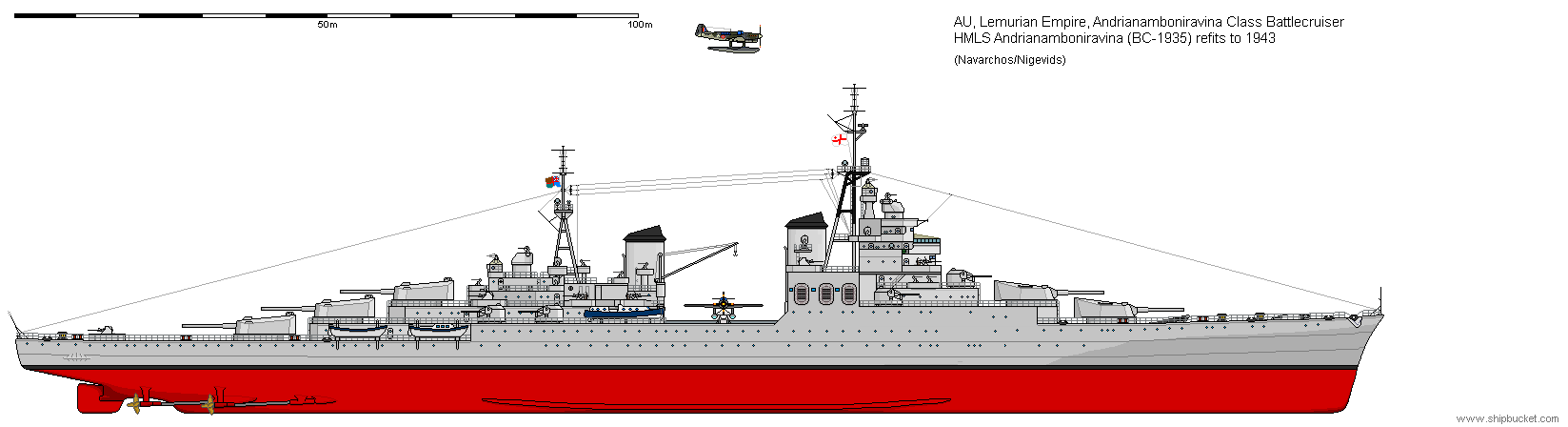
Andrianamboniravina was towed by one of the cruisers, to an Atlantean port, where it could be repaired. The amount of mechanical work required to get the Andrianamboniravina back into work took almost six months and gave the Andrianamboniravina the chance for a full 40mm refit and electronic outfit to be carried out.
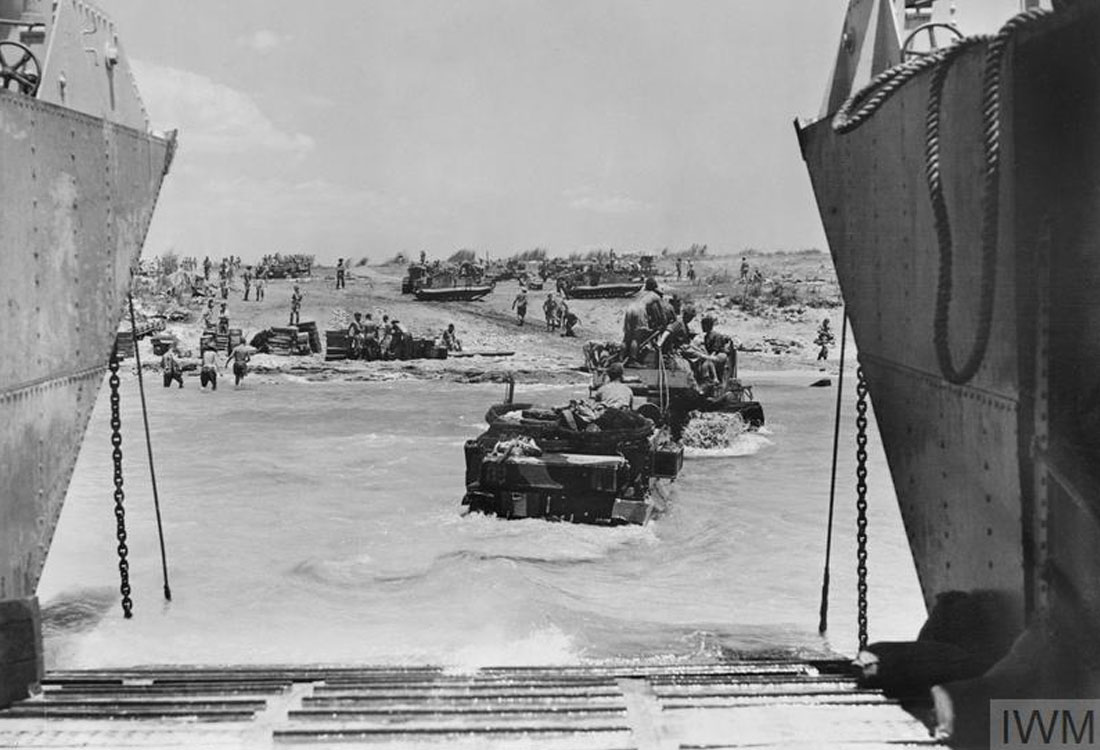
The Andrianamboniravina returned to duty with Force H to find that the world had changed. The US had joined the Allies in December 1941, rather involuntarily. Forces were now being amassed on Atlantis to start the retaking of Europe. This would start with the retaking of North Africa and entry into Europe through Spain. Force H had been majorly reinforced to help achieve these objectives. Many Lemurian ships were a part of this Fleet. The Rear Admiral aboard the Andrianamboniravina was the officer in command of Lemurian forces. The Andrianamboniravina got to watch the hundreds of sorties being launched by a dozen large and light fleet carriers covering the attacks on Dakar and Casablanca. These forces overwhelmed the defences and allowed the landing craft to land their troops almost unopposed. The Vichy French forces would fight, after the debacle at Mers el Kebir. For a lot of American troops this was their first actions against troops that had fought in France against the Germans. Sheer numbers and equipment carried the day. But it did show that the American forces had a lot to learn. Mistakes may have been made, but they were only made once. To the north, Atlantean and Allied troops went into Spain and again superior numbers and equipment did the job. But Spain had some Germanic State's units to stiffen their resistance. As usual these were difficult to overcome. Air superiority proved the difference and aircraft would clear any obstacle to the Allied advance. Madrid is taken and Franco is executed. Spain surrenders. North Africa is cleared. Italy is next.
June 1943 and it is Operation Husky. The taking of Sicily. This was accomplished and the Allies went on to invade mainland Italy. The Italians surrendered but the German forces in Italy did not retreat and with a few summary executions kept a number of Italian units fighting for the Axis. This resistance held up the Allied advances and Italy was not cleared by the time of D-Day. These were aided by the forces in Spain being able to break through the German defences deployed at the North and South ends of the Pyrenees. The noose was tightening. The Andrianamboniravina provided fire support to the Allied troops along the Northern coast of Spain and into the Aquitaine region of France. The Germans had a force of six Biber mini-subs defending the port of Bordeaux. Only four were able to be launched, on the day, against the Allied forces coming north along the French coast. These four kept close inshore and stalked the Allied forces. Finally turning toward the open ocean and firing their torpedoes. Eight fired, three hits. None of the mini-subs returned to base. The Andrianamboniravina was unlucky and was hit twice. The ship was forced to Belfast for repairs. It barely made it. The Andrianamboniravina was patched up and ordered to return to Lemuria where the ship arrived in September 1944. A full survey was made of the ship, and the latest damage with the damage from the Ostereich action, put the ship beyond economical repair. The ship was paid off and the crew transferred to newly completing ships. The Andrianamboniravina was used as an accommodation ship till 1946 when it was deleted from the Navy List and sold for scrap.
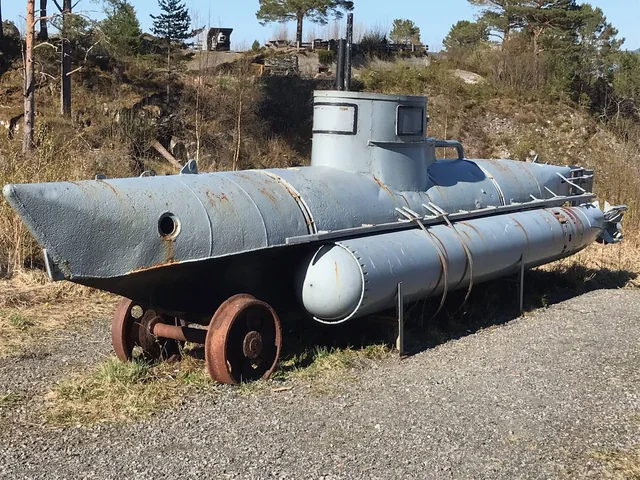
I do try and find different ways to sink and damage ships. Biber mini-subs are not something that has much of a place in history. So crippling the Andrianamboniravina would be a great success for the unit.