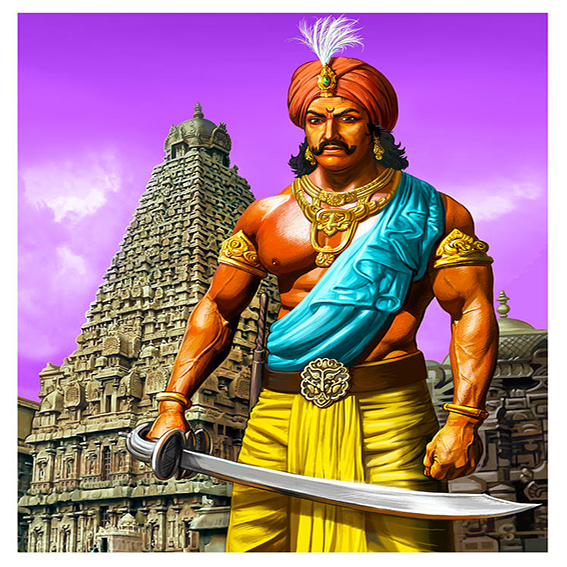
Naming conventions: there are three interested parties for putting the names on ships. The Vazimba who were the original inhabitants of lower Lemuria, the Merina who arrived in Lemuria from Africa, and the Tamil people who came across to Lemuria from India. All three put forward names for each major ship type to be built. I of course have the casting vote that counts.
The Rajaraja and Rajendra waited and waited for funds to become available to build them. Lemurian Naval Directors were still 'Battleship' Admirals. The King Andriamanelo pair and Vazimba would come first. Finally funds were made available for one large carrier (CV) to be laid down in 1939 and another in 1940. They would be completed in 1943-44.
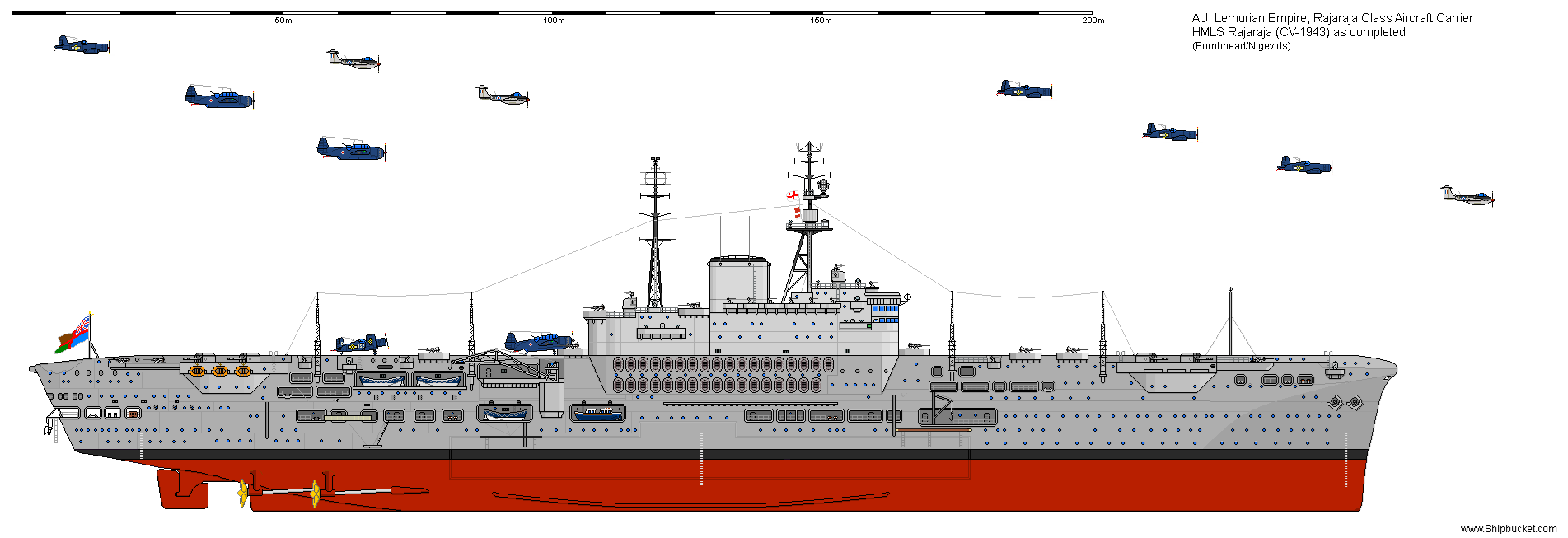
The Rajaraja completed in October 1943 with all of the updated equipment that was available at the time. Enough of the US Grumman Avenger and Vought Corsair aircraft were available to join the eighteen Westland Whirlwind II twin engined long range fighters that came from the Australian CAC aircraft factory. This gave the ship the best possible strike and search capabilities available. The Rajaraja trained in the Lemurian Sea while it waited to be joined by the Rajendra (March/1944) at which time they were joined by the Vazimba to make the core of the Eastern Commonwealth Fleet. As ships joined this new unit, then the base was changed first to Colombo then to Darwin in Australis where all of the Commonwealth components of the fleet would join together. Further training of the fleet took place in the northern Indian Ocean. July 1944 the fleet moved north into its first theater of operations in the South China Seas against Japanese forces.
What followed was a complete rout of Japanese forces as the Eleven Commonwealth aircraft carriers (8 CV, 3 CVL) wiped out all of the minor and second string units they encountered. All of the first rate equipment was attacking the US Pacific Fleet as they island hopped toward Japan. The US heavy bombers getting closer to Japan all the time. Even when Kamikaze units were deployed against the Commonwealth Fleet the two Lemurian carriers came through unscathed.
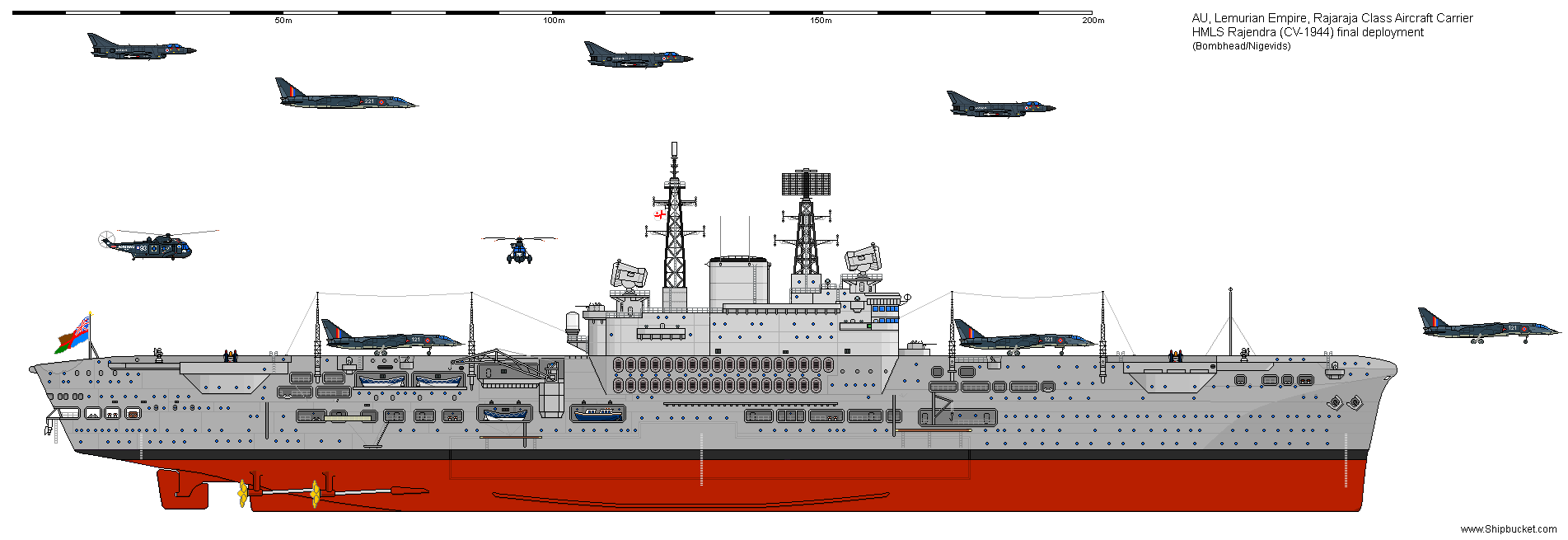
The post-war events for the ships relied on the two light carriers being available at the same time. While two fought at Korea the other two were being rebuilt. Each Rajaraja would have a CVL as its mate for deployments while the other pair were undergoing the latest round of refits and rebuilds. All of them would need time in dock to have angled flight decks fitted. Radar and rocketry refits took place regularly while the gun armament reduced. This was when the extra big bridge superstructure the ships had been fitted with to take the squadron ready rooms and extra rooms for radar operations came in to its own.
The Lemurian Navy was all about trying to control the Battle Sphere its ships were in. The 3D radar was to control the area around the ship for its own protection and that of the ships around it. Then the AWACS aircraft could increase the range of the Battle Sphere and give the fleet more time to react to threats.
The last hurrah for the type was the Falkland Island War in 1982. The Rajendra had just received its new air complement and was ready for deployment with its CVL that had been converted to a Harrier carrier with ASW aircraft. They were ready for action. One of the problems in that real world was the British forces had no strike aircraft that could attack the Argentinian mainland to destroy aircraft and facilities around the airfields. The Rajendra altered that. The 20 TSR2 strike aircraft could level airfields back to bedrock. and easily outrun any of the Argentinian aircraft that might be sent after them. Lead them on to the Scimitar fighter protection squadron for the TSR2's. The TSR2 strikes on the airfields and naval installations took out any chance of their being any other result than a Commonwealth win.